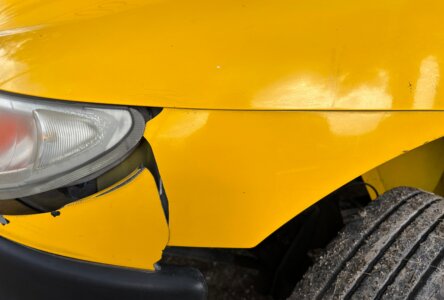
Many drivers assume that if a collision only leaves a scratched bumper or a small dent, their vehicle is perfectly safe to drive. Unfortunately, that’s not always true.
Minor accidents can affect vehicle safety sensors even when the visible damage appears insignificant. Modern vehicles rely on cameras, radar, ultrasonic sensors, and other Advanced Driver Assistance Systems (ADAS) that must remain precisely aligned to function correctly, and a small parking lot collision, a low-speed rear-end accident, or even a windshield replacement can shift these components enough to reduce their accuracy.
As more Canadian drivers own vehicles equipped with ADAS technology, it’s becoming increasingly important to understand that collision damage isn’t always visible.
At Craftsman Collision, we know restoring your vehicle means more than repairing the bodywork. It also means making sure your safety systems perform the way the manufacturer intended.
Why Minor Accidents Can Affect Modern Vehicle Safety Systems
Today’s vehicles use a network of interconnected sensors to monitor the road, nearby vehicles, pedestrians, and obstacles. These systems work together to help prevent collisions and reduce the severity of accidents.
The challenge is that these sensors rely on extremely precise positioning. Even a slight shift in a bumper bracket, windshield mounting point, or mirror housing can affect how accurately a sensor measures distance or detects objects.
Many people don’t realize that important safety technology is hidden inside components that are commonly damaged during low-speed collisions, including:
- Front and rear bumpers
- Windshields
- Side mirrors
- Rear quarter panels
- Grilles
Although the impact might seem minor, the force transferred through these parts is often enough to move a sensor or its mounting bracket out of specification.
Modern safety features that rely on sensors
Many of today’s most valuable driver assistance features depend on properly functioning vehicle safety sensors, including:
- Automatic Emergency Braking
- Forward Collision Warning
- Adaptive Cruise Control
- Blind Spot Monitoring
- Lane Keeping Assist
- Rear Cross Traffic Alert
- Parking Assist
- Traffic Sign Recognition
When even one sensor is misaligned, multiple systems can be affected because they often share information with one another.
Which Vehicle Sensors Are Most Commonly Affected?
Different types of ADAS sensors are installed throughout modern vehicles, and each serves a different purpose.
Radar sensors
Radar sensors are commonly mounted behind the front grille or inside the front and rear bumpers.
They help power features like:
- Adaptive Cruise Control
- Forward Collision Warning
- Automatic Emergency Braking
Because they’re mounted behind bumpers, even a relatively small bumper impact can change their position enough to require radar sensor calibration.
Windshield cameras
Many vehicles have forward-facing cameras mounted near the rearview mirror behind the windshield.
These cameras support systems including:
- Lane Departure Warning
- Lane Keeping Assist
- Pedestrian Detection
- Traffic Sign Recognition
If the windshield is replaced or the mounting angle changes during repairs, ADAS calibration is often required before these systems will operate accurately again.
Ultrasonic parking sensors
The small circular sensors built into many bumpers help drivers park safely by detecting nearby objects.
These ultrasonic sensors assist with:
- Parking Assist
- Close-range obstacle detection
- Parking alerts
Because they sit directly inside the bumper, they’re among the most common components affected during a minor collision. Parking sensor repair or replacement might be necessary if the bumper has been damaged.
Blind spot monitoring sensors
Blind spot monitoring systems typically use radar sensors mounted behind the rear bumper or within the rear quarter panels.
Even a light side impact or rear-end collision can interfere with their ability to detect vehicles approaching from adjacent lanes.
Crash impact sensors
Modern vehicles also contain crash sensors that monitor collision forces and communicate with the airbag control system.
These sensors don’t always require replacement after a minor collision, but technicians perform diagnostic testing to confirm they continue operating properly before returning the vehicle to the road.
Signs Your Safety Sensors May No Longer Be Working Properly
One of the biggest misconceptions about ADAS sensors is that they always trigger a dashboard warning light when something is wrong.
In reality, many sensor problems don’t produce an obvious warning.
Common warning signs
If you’ve recently been involved in a collision, watch for symptoms like:
- False collision alerts
- Unexpected or phantom braking
- Lane assist steering unpredictably
- Parking sensors beeping when nothing is nearby
- Blind spot monitoring no longer detecting vehicles
- ADAS warning lights on the dashboard
- Adaptive cruise control becoming unavailable
- Intermittent system error messages
Any of these signs could indicate that one or more vehicle safety sensors require inspection.
Why some problems remain invisible
Some sensor issues are impossible to notice during everyday driving.
Your vehicle might seem to drive normally while a camera or radar sensor is slightly misaligned. In these situations, diagnostic scans performed by trained technicians often uncover hidden calibration errors that wouldn’t otherwise be detected.
That’s why a professional post collision inspection is an important part of collision repair after a minor accident.
Why Diagnostics and ADAS Calibration Matter After a Minor Collision
Modern collision repair goes far beyond replacing damaged parts.
Manufacturers publish detailed repair procedures that specify when technicians must inspect, scan, repair, replace, or recalibrate ADAS components after an accident.
At Craftsman Collision, our repair process follows these manufacturer repair procedures to help restore your vehicle’s safety systems correctly.
This typically includes:
- Pre-repair diagnostic scans
- Inspection of sensor mounting locations
- Repairs following OEM collision repair procedures
- Post-repair diagnostic scans
- ADAS calibration using specialized equipment
- Final verification that systems are operating correctly
Simply replacing a bumper or windshield doesn’t automatically restore sensor accuracy. The sensors must also be recalibrated so they understand exactly where they’re positioned relative to the vehicle.
Depending on the manufacturer, calibration might involve:
- Static calibration, performed inside the repair facility using specialized targets and measuring equipment.
- Dynamic calibration, completed while driving under specific conditions so the vehicle’s systems can verify their operation.
Following OEM repair procedures helps make sure safety features perform as designed if they’re ever needed.
To learn more about why manufacturer procedures matter, read our guide to OEM collision repair procedures.
When calibration is commonly required
ADAS calibration is often recommended after:
- Bumper replacement
- Windshield replacement
- Suspension repairs
- Wheel alignment
- Side mirror replacement
- Radar sensor replacement
- Camera replacement
- Collision repairs involving sensor mounting areas
Even if no warning lights appear, manufacturers often require calibration whenever these repairs are completed.
What Happens If Damaged Sensors Are Left Unrepaired?
Ignoring damaged or misaligned sensors doesn’t always cause immediate problems, but it can reduce the effectiveness of important safety features.
Potential consequences include:
- Inaccurate distance measurements
- Delayed Automatic Emergency Braking
- False collision warnings
- Missed obstacle detection
- Reduced driver confidence
- Less effective lane departure warning systems
- Blind spot monitoring failures
- Insurance complications if incomplete repairs contribute to future damage
These systems are designed to assist drivers during critical moments, and if they aren’t working properly, they might not respond when you need them most.
Why proper collision repair protects your vehicle’s safety systems
At Craftsman Collision, we believe repairing your vehicle means restoring both its appearance and its safety.
Our technicians receive ongoing training on modern vehicle technology and follow manufacturer repair procedures whenever applicable. We use specialized diagnostic equipment and calibration tools to verify that ADAS sensors perform as intended before repairs are complete.
Our goal isn’t simply to make collision damage disappear, it’s to help restore your vehicle as closely as possible to its pre-accident condition, including the advanced safety systems you rely on every day.
Don’t Let a Minor Accident Become a Bigger Safety Problem
A small dent or scratched bumper doesn’t always tell the whole story.
Modern vehicles depend on precisely calibrated ADAS sensors to help support safe driving, and even a seemingly minor collision can affect cameras, radar, parking sensors, and other safety systems without leaving obvious signs.
Professional diagnostics, manufacturer-approved repair procedures, and ADAS calibration help restore these systems to their intended performance.
If your vehicle has been involved in any collision, don’t assume cosmetic repairs are enough. Schedule a professional inspection with Craftsman Collision.
Our experienced technicians will inspect your vehicle, perform the necessary diagnostics, and help restore both its appearance and its advanced safety systems so you can get back on the road with confidence.
Frequently Asked Questions
How do car sensors get damaged?
Car sensors are commonly damaged or misaligned during low-speed impacts, bumper damage, windshield replacement, suspension repairs, or wheel alignments. Even when the sensor itself isn’t broken, its mounting position may change enough to require ADAS calibration.
What are 90% of accidents caused by?
Human error contributes to the vast majority of vehicle collisions. Driver assistance systems like Automatic Emergency Braking, lane departure warning, and blind spot monitoring are designed to reduce risk, but they support attentive driving rather than replace it.
Do cars have sensors to tell when an accident happened?
Yes. Modern vehicles include crash impact sensors that detect collision forces and communicate with systems like the airbags. After an accident, technicians perform diagnostic testing to verify these systems are functioning properly.
What are the riskiest days to drive?
Collision risk varies depending on traffic, weather, and seasonal conditions, but weekends, holidays, and periods of heavy traffic often see higher crash rates. Regardless of when an accident occurs, having your vehicle professionally inspected afterward helps identify hidden damage that might otherwise go unnoticed.