ADAS calibration is the process of aligning and testing a vehicle’s cameras, radar sensors, and other Advanced Driver Assistance Systems (ADAS) to make sure they work exactly as the manufacturer intended.
Modern vehicles rely on these systems to help drivers avoid collisions, stay in their lane, monitor blind spots, and react to hazards, and even a small change to a sensor’s position during a repair can affect how these safety features perform.
That is why many vehicles require ADAS calibration after collision repairs, windshield replacement, wheel alignments, suspension work, or sensor replacement. Rather than being an optional extra, ADAS calibration is often required to return a vehicle to safe operating condition.
At Craftsman Collision, we follow manufacturer repair procedures and use specialized equipment to help restore your vehicle’s safety systems with precision.
What Is ADAS Calibration?
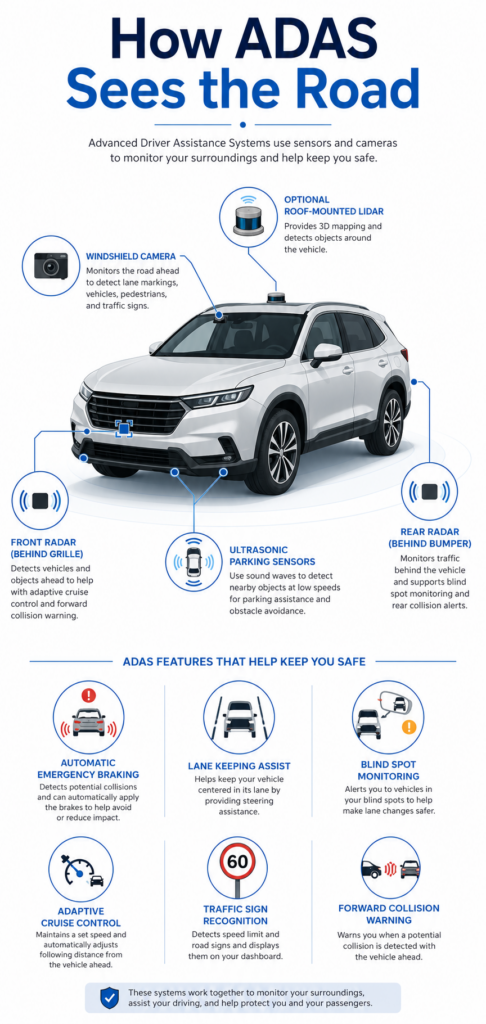
ADAS stands for Advanced Driver Assistance Systems. These technologies use cameras, radar sensors, ultrasonic sensors, and, on some vehicles, lidar to monitor the road and assist the driver.
Many modern vehicles include features like:
- Automatic emergency braking
- Lane departure warning
- Lane keeping assist
- Adaptive cruise control
- Blind spot monitoring
- Traffic sign recognition
- Forward collision warning
These systems depend on precise measurements. A front-facing camera mounted behind the windshield, for example, must be aimed within extremely tight tolerances. Even a slight change in its position can affect how it interprets lane markings, traffic signs, or nearby vehicles.
ADAS sensor calibration restores these components to the manufacturer’s specifications after repairs or maintenance, and this process helps make sure the vehicle’s cameras and sensors communicate accurately and work together as designed.
Why ADAS Calibration Is So Important
Many drivers assume their vehicle’s safety systems will continue working after a repair, when in reality, even a minor adjustment to a sensor or camera can change its accuracy.
These systems often measure distances using fractions of a degree, and while that sounds insignificant, a tiny error at the sensor can become several feet of difference farther down the road.
For example, if a front-facing camera is aimed slightly too high or too low after a windshield replacement, it might incorrectly detect lane markings or fail to recognize an obstacle at the correct time.
Improper calibration can affect systems responsible for:
- Detecting vehicles ahead
- Maintaining lane position
- Calculating following distance
- Recognizing pedestrians
- Activating emergency braking
This is why manufacturers specify ADAS recalibration after many types of repairs and restoring body panels alone is not enough. The vehicle’s electronic safety systems must also be verified before it returns to the road.
When Does a Vehicle Need ADAS Calibration?
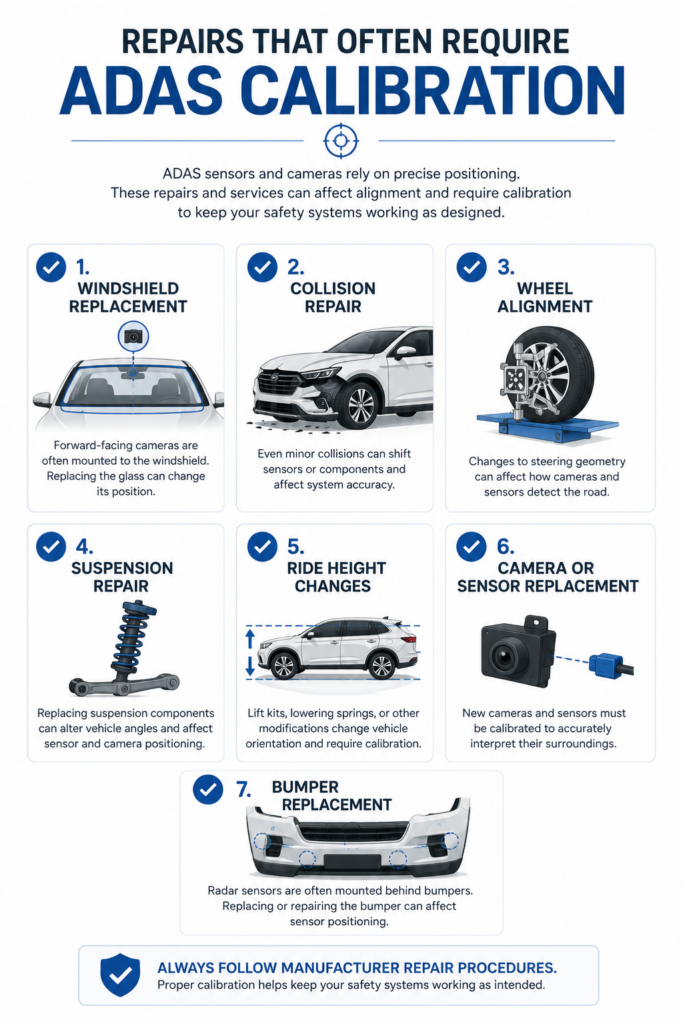
Many repairs and maintenance services affect the position of cameras, sensors, or the vehicle itself. In these situations, calibration is often required.
After a Windshield Replacement
Many forward-facing cameras are mounted directly to the windshield and replacing the glass changes the mounting position, making windshield calibration necessary on many vehicles.
If you’re replacing your windshield, learn more about auto glass repair and replacement and why proper camera calibration after windshield replacement is an important part of the process.
After Collision Repairs
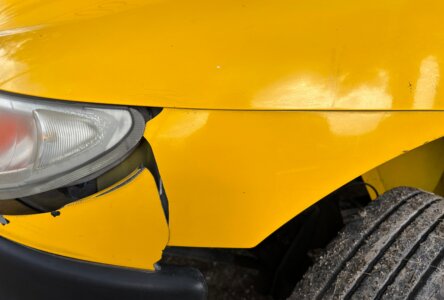
Even relatively minor collisions can shift components or alter sensor alignment, and collision repair ADAS procedures often include recalibration after repairs are completed.
Following manufacturer repair procedures helps make sure the vehicle’s safety systems continue working properly after an accident.
After a Wheel Alignment
A wheel alignment changes the vehicle’s steering geometry, and some manufacturers require ADAS calibration afterwards because changes to steering angle can affect camera and radar performance.
After Suspension Repairs
Replacing suspension components can alter ride height and vehicle angles and these changes influence how cameras and sensors are positioned relative to the road.
After Changes to Vehicle Ride Height
Installing lift kits, lowering springs, or other suspension modifications changes the orientation of sensors and cameras, so manufacturers often recommend recalibration whenever ride height changes.
After Camera or Sensor Replacement
If a damaged camera, radar unit, or sensor is replaced, it must be calibrated before it can accurately interpret its surroundings. Radar sensor calibration is especially important because these sensors help determine vehicle speed and following distance for systems like adaptive cruise control and forward collision warning.
After a Bumper Replacement
Many radar sensors are mounted behind the front or rear bumper, so replacing or repairing the bumper can affect sensor positioning, making recalibration necessary.
Why Manufacturer Repair Procedures Matter
Every manufacturer has different calibration requirements, and some vehicles require calibration after repairs that others do not.
At Craftsman Collision, we follow OEM repair procedures rather than relying on assumptions. This helps make sure your vehicle receives the services specified by its manufacturer.
The Three Types of ADAS Calibration
The calibration process depends on the vehicle and the systems involved.
Static Calibration
Static ADAS calibration takes place inside the repair facility and technicians position specialized targets around the vehicle while it remains stationary. Precise measurements, alignment tools, and manufacturer-specific equipment allow cameras and sensors to be adjusted accurately.
Dynamic Calibration
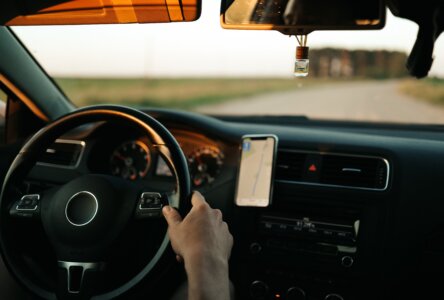
Dynamic ADAS calibration occurs while driving.
The vehicle must be driven under specific road conditions and speeds so its systems can complete the learning process, and manufacturers often specify exact speed ranges, road markings, weather conditions, and driving distances.
Dual Calibration
Many newer vehicles require both static and dynamic ADAS calibration.
Technicians first perform the stationary calibration inside the shop before completing the required road test. This combination is becoming increasingly common as vehicles incorporate more advanced safety technologies.
What Happens During an ADAS Calibration?
While procedures differ between manufacturers, the process typically includes several important steps.
- Vehicle inspection to confirm repairs are complete.
- Diagnostic scan to identify any system faults.
- Alignment verification to make sure the vehicle meets manufacturer specifications.
- Camera and sensor calibration using specialized equipment.
- Verification testing through static, dynamic, or dual calibration procedures.
- Final diagnostic scan and documentation confirming successful calibration.
Before returning the vehicle to the customer, technicians verify that the systems are operating according to manufacturer specifications.
How Much Does ADAS Calibration Cost?
In Canada, ADAS calibration pricing varies depending on the vehicle and the repairs involved.
Several factors influence the cost, including:
- Vehicle make and model
- Number of cameras and sensors
- Static, dynamic, or dual calibration requirements
- Manufacturer-specific procedures
- Diagnostic and verification requirements
While calibration adds to the repair process, it helps make sure your vehicle’s advanced safety systems function as intended.
Why Choosing the Right Repair Shop Matters
ADAS calibration requires specialized equipment, trained technicians, and access to manufacturer repair information, and not every repair facility has the tools or expertise needed to perform these procedures correctly.
At Craftsman Collision, we focus on restoring more than just the appearance of your vehicle. Our technicians follow manufacturer-approved repair procedures, perform required ADAS calibration, verify system operation, and document completed repairs so you can drive away with confidence.
Whether your vehicle needs windshield calibration, radar sensor calibration, or a complete ADAS recalibration after collision repair, we help make sure every required step is completed according to manufacturer standards.
Not sure whether your repair requires ADAS calibration? Contact Craftsman Collision for a repair assessment and manufacturer-guided recommendations.
Book an estimate today to help restore your vehicle’s safety systems and get back on the road with confidence.
Frequently Asked Questions
What does ADAS stand for?
ADAS stands for Advanced Driver Assistance Systems. These technologies include features like automatic emergency braking, adaptive cruise control, lane keeping assist, and blind spot monitoring.
How long does an ADAS calibration take?
Most ADAS calibrations take between one and three hours. More complex vehicles requiring both static and dynamic calibration may take longer.
Is ADAS calibration required?
Yes, many manufacturers require ADAS calibration after windshield replacement, collision repair, wheel alignments, suspension work, or sensor replacement. Following these procedures helps make sure the vehicle’s safety systems continue operating as designed.