A vehicle is generally “written off” or declared a total loss when an insurance company determines that repairing it no longer makes financial sense. But that doesn’t always mean that the vehicle is destroyed or physically impossible to repair.
The decision involves more than the repair estimate, and your insurer might also consider the vehicle’s pre-loss value, its expected salvage value, the type of damage, and other costs involved in returning it to its pre-accident condition.
For Canadian drivers, the exact process varies by insurer and province. This guide focuses on an insurance write-off following a collision, hailstorm or other insured loss, including what happens to the vehicle and how a total loss settlement is determined.
What Does It Mean When a Vehicle Is Written Off?
“Write-off” and “total loss” are commonly used to describe a vehicle an insurer has decided is not economical to repair.
A written-off car is not necessarily beyond physical repair. In some cases, a body shop could technically repair the damage, but the total cost would not make financial sense compared with the vehicle’s pre-loss value.
An insurer might consider:
- The estimated cost of repairs
- The vehicle’s actual cash value before the loss
- Its expected salvage value
- Additional costs associated with the claim
- The type and extent of damage
There is no single Canada-wide percentage at which every damaged vehicle automatically becomes a write-off. Provincial rules, insurer practices, and the circumstances of the individual claim all play a role.
How Do Insurance Companies Decide to Write Off a Vehicle?
The process often starts with a collision damage estimate. Technicians identify damaged parts and determine what work is required to restore the vehicle according to proper repair procedures.
The insurer then reviews factors like the vehicle’s actual cash value, repair costs, and salvage value. Its decision might also consider the vehicle’s age, kilometres, pre-loss condition, required parts and labour, structural damage, and damaged safety systems.
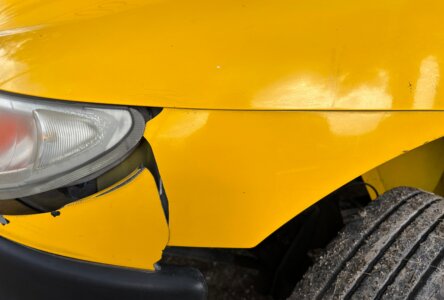
The first repair estimate does not always reveal the full cost, and damage hidden behind bumpers, body panels, and other components could become visible only after technicians begin disassembly. A seemingly minor fender bender, for example, could involve more than the cosmetic damage visible from outside. If technicians find additional damage, a supplemental estimate could increase the expected repair cost.
Visible damage doesn’t always tell the whole story. If you’re unsure how extensive the damage is, bring your vehicle to Craftsman Collision for a professional collision damage assessment.
Why Modern Vehicles Can Become Expensive to Repair
Modern collision repair involves much more than replacing damaged sheet metal. Many vehicles have cameras, radar sensors, and other advanced driver assistance system (ADAS) components mounted in windshields, bumpers, mirrors, and other areas vulnerable to collision damage. Repairs could require diagnostic scans, sensor replacement, and manufacturer-specified calibrations.
Airbags, high-strength steels, aluminum components, and other structural or safety-related systems could also add complexity to a repair. A relatively small impact could therefore result in a much larger repair estimate than the exterior damage suggests.
How Is the Value of a Written-Off Vehicle Calculated?
When an insurer declares a vehicle a total loss, it generally determines what the vehicle was worth immediately before the loss. This is often called its actual cash value or market value.
Factors affecting car write-off value could include:
- Make, model and model year
- Kilometres driven
- Pre-loss condition
- Trim level and factory options
- Previous damage
- Local market prices for comparable vehicles
- Recent repairs or improvements, where applicable
The goal is not necessarily to determine what you originally paid for the vehicle or what a brand-new replacement costs. The valuation focuses on your vehicle’s value before the insured loss, subject to your policy terms and applicable provincial rules.
What Happens After Your Car Is Declared a Total Loss?
The exact steps vary between provinces and insurers, but the process often looks like this:
- Your insurer confirms that the vehicle is a total loss.
- The insurer determines the vehicle’s pre-loss value and proposed settlement.
- You review the valuation and settlement information.
- Any loan or lease obligations are addressed.
- You remove personal belongings and deal with your licence plates and registration as instructed.
- Ownership of the vehicle is transferred or another arrangement is made under the insurer’s and province’s rules.
- The insurer issues the settlement payment according to your policy and claim.
Do not remove any parts or equipment from the vehicle without first checking with your insurer, because items included in the vehicle’s valuation could need to remain with it.
What If You Disagree With the Insurance Company’s Value?
You do not have to accept a valuation without reviewing how it was calculated.
If you believe your vehicle was worth more before the collision, gather evidence supporting a higher value. Useful records could include comparable local vehicle listings, maintenance records, receipts for recent work, documentation of options or upgrades and photos showing the vehicle’s pre-loss condition.
An independent appraisal might also help in some cases, but the dispute process depends on your insurer and province. For example, ICBC advises customers who disagree with a vehicle valuation to first discuss it with their claims representative. Further review and dispute options are available if an agreement cannot be reached.
The strongest argument is usually based on reliable evidence rather than the amount you personally believe the vehicle was worth.
Can You Keep or Repair a Written-Off Vehicle?
The quick answer is sometimes. Whether you can keep and repair a salvage vehicle depends on its damage, its assigned status, your insurer, and any provincial requirements.
Common vehicle statuses include:
| Status | What it generally means | Could it return to the road? |
| Normal | No salvage or rebuilt designation | Yes |
| Salvage | Written off but potentially repairable | Subject to provincial requirements |
| Rebuilt | Former salvage vehicle that has completed the required process | Potentially |
| Irreparable/non-repairable | Vehicle is not eligible to return to normal road use | Generally no |
A salvage vehicle could require repairs, inspections and a change in registration status before returning to the road, and insurance options could also change. Check your province’s specific requirements before deciding to keep a written-off vehicle.
What If You Still Owe Money on the Vehicle?
An insurance settlement is based on the covered loss and your policy terms. It is not automatically equal to the balance of your auto loan.
For example:
Vehicle settlement: $24,000
Remaining auto loan: $28,000
Potential remaining loan balance: $4,000
In this example, you could still owe $4,000 after the insurance settlement is applied to the loan.
Some drivers have replacement-cost, waiver-of-depreciation or gap-type protection that changes the financial outcome after a total loss. Coverage differs significantly, so check your policy or speak with your insurer or broker to understand what applies to you.
Write Off Vehicle FAQs
What is considered a write-off for a vehicle?
A vehicle is generally considered a write-off when an insurer determines that repairing it is not economically practical, based on factors like its pre-loss value, repair costs, and salvage value. A written-off vehicle does not have to be completely destroyed.
How much can you write off on a vehicle?
If you mean an insurance write-off, there is no single Canada-wide dollar amount or percentage that applies to every vehicle. Insurers assess each claim based on the vehicle’s value, estimated repair costs and other relevant factors.
What car damage is a write-off?
No specific type of damage automatically makes every car a write-off. Severe structural damage, extensive body damage, deployed airbags, damaged safety technology, and other costly repairs could lead an insurer to declare a total loss.
Even damage that appears limited from the outside could become more extensive once a collision repair facility disassembles and inspects the affected areas.
Can I claim my vehicle on my taxes in Canada?
A tax write-off is different from an insurance write-off. If you use a vehicle to earn business income, the Canada Revenue Agency allows eligible motor vehicle expenses to be deducted under specific rules, generally based on the portion related to earning business income.
For advice about your specific tax situation, speak with a qualified tax professional or review the Canada Revenue Agency’s motor vehicle expense guidance.
Get Your Vehicle Properly Assessed After a Collision
Whether a damaged vehicle gets repaired or declared a total loss depends on more than what you see from the outside. Hidden structural damage, damaged safety systems, and other issues found during disassembly can all affect the final repair estimate.
If your insurer approves repairs, Craftsman Collision works with insurers to help make the collision repair process as straightforward as possible. Find your nearest Craftsman Collision location to have an experienced collision repair team assess your vehicle.